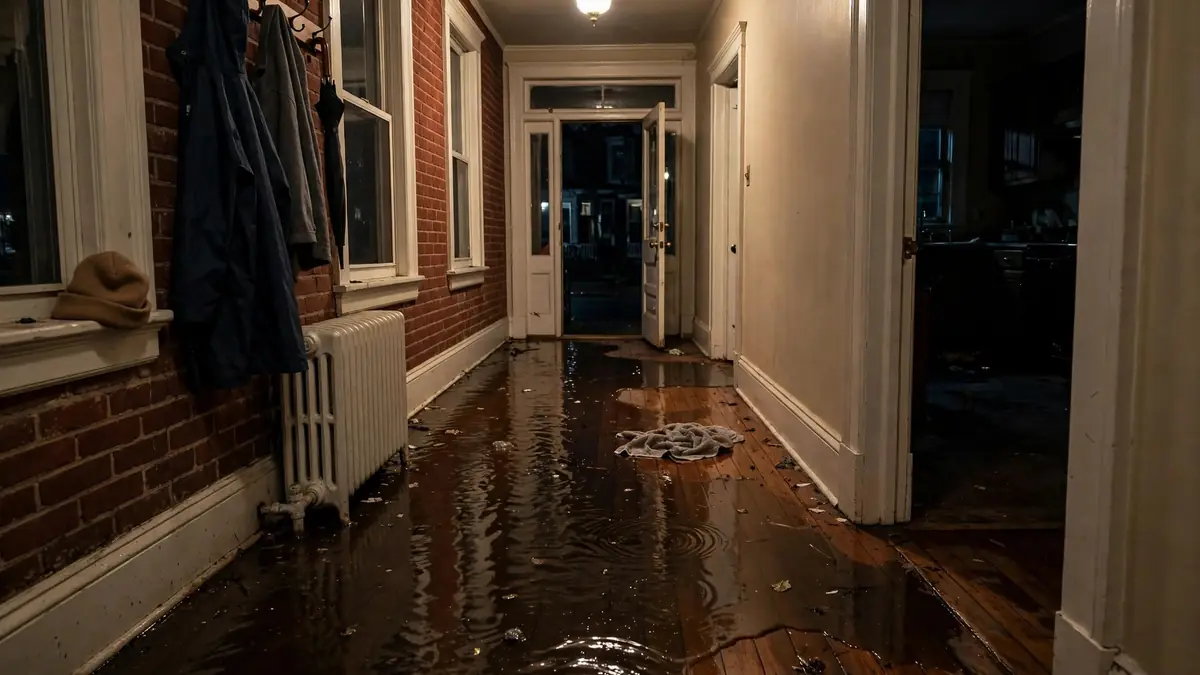
Key facts: Emergency Water Damage Service
- The phone line connects to an independent contractor 24 hours a day, 7 days a week, including holidays.
- Never enter standing water until you are sure the power to that area is off.
- Coverage is limited to ZIP codes in northern New Castle County, not the whole state.
- EPA guidance is to dry wet materials and items within 24 to 48 hours to help prevent mold.
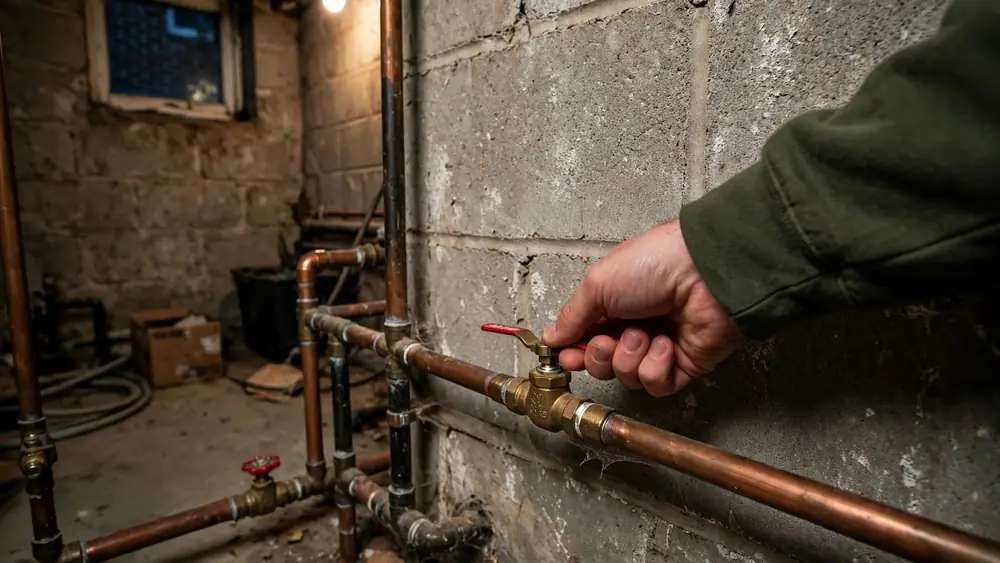
Danger check
Three things that make a wet house unsafe
Electricity is the first. Water on a floor can be carrying current from an outlet, a cord or an appliance you cannot see, and Ready.gov warns against touching electrical equipment when it is wet or when you are standing in water [2]. If the breaker panel is somewhere you can reach on dry footing, switch off the affected circuits. If reaching it means stepping through water, leave it alone and call Delmarva Power or an electrician.
Gas is the second. A rotten-egg smell means leave now, leave the door open behind you, and phone the gas utility from outside. Do not flip light switches on your way out. The third is overhead weight. A soaked ceiling can hold a surprising load, then let go all at once. In the plaster ceilings of older Wilmington houses, that load is heavier still, so close the door on that room and stay out of it.
Stop the flow
Finding out where the water is coming from
Your next move depends on the source, and a thirty-second look usually tells you. Clear water spraying or running from a wall, ceiling or appliance points to a supply line, and the main valve will stop it. See the emergency burst pipe page if that is what you have. Dark, foul water rising from a floor drain or toilet is a different animal: stop using every fixture in the house and go to the emergency sewage backup page.
Water rising across a basement floor during a storm may be groundwater, a dead sump pump or an overflowing creek, and no valve will touch it. The emergency flooded basement page deals with that one. If water is dripping through a ceiling during rain with no plumbing nearby, suspect the roof, and put a bucket under it rather than climbing up in the dark. A roofer can look once the weather has passed.
The phone call
What to say when you call
Water Damage Restoration Delaware is a referral service, so the person who picks up is an independent contractor. That conversation is where availability, scheduling and terms get settled, directly between the two of you. Have your ZIP code ready first, since it determines who the call can reach.
Then give a plain account: where the water came from, whether it has stopped, which floors and rooms it reached, roughly how deep it is, and when you first noticed. Say whether the power is off and whether anyone in the home is elderly, very young or unwell. It helps to mention the kind of house too. A rowhome with a shared wall and a stone foundation raises different questions from a two-story colonial with a finished basement. Ask directly what the contractor can do tonight and what they would leave until morning. Ask about their licensing and insurance as well, because this site makes no claims about either on anyone's behalf.
Timing
Does this need someone tonight, or can it wait until tomorrow?
Treat it as a tonight problem if water is still entering the house and you cannot stop it, if there is sewage involved, if more than one room is wet, if water has reached ceilings or wall cavities, or if the wet area includes the panel or heating equipment. The same goes for a house with someone vulnerable living in it, or a home you must leave.
A morning call can be reasonable when the source is shut off, the wet patch is small and on a hard floor, the water was clean, and you can mop and ventilate it yourself. Even then, do not let it drift. EPA guidance calls for drying wet materials and items within 24 to 48 hours to help keep mold from taking hold [1], and that clock started when the water arrived, not when you found it. Since the line is answered at any hour, there is no need to wait to ask the question. A contractor can often tell you over the phone which side of that line you are on.
Next hour
A sensible order for the next hour
- 1
Secure the house
Clear people and pets, and deal with power from a dry spot only.
- 2
Stop it
Close the main valve or stop using the drains, depending on the source.
- 3
Record it
Photograph each wet room before anything is moved.
- 4
Call
Give your ZIP code and describe the source, depth and rooms.
- 5
Notify
Tell your insurer, and your landlord if you rent.
While you wait
Useful things to do once the danger has passed
With the power off and the source stopped, small actions buy real time. Lift rugs off wet floors so their dyes do not bleed. Slide foil or plastic under furniture legs. Carry paper, photos and electronics to a dry upper floor. If the water is clean and shallow and you have a wet/dry vacuum plugged into a safe outlet well away from the water, pull up what you can.
Open the interior doors. Opening windows helps on a cold, dry night, but in humid summer weather it can bring in more moisture than it removes, so keep them shut if the air outside feels heavy. Run a dehumidifier if you own one and the circuit is safe. Leave the bigger decisions alone for now. Do not cut into walls, pull up flooring or rip out wet drywall tonight: a contractor needs to see what is there, and your insurer may want to as well. The first steps guide has a longer checklist for the days that follow.
Local
Storm nights in northern New Castle County
Bad nights here tend to follow the weather. When the remnants of Ida came through in September 2021, the Brandywine in Wilmington crested at a record 23.14 feet [4], and calls of that kind arrive by the street rather than by the house. Coastal storms add to it, with nor'easters most frequent from November through March [5]. If your neighbors are flooding too, contractors will be stretched and you should expect a frank conversation about availability, so call as early as you can.
Coverage through this line runs across ZIP codes in northern New Castle County, including Wilmington, Newark, Claymont, Hockessin, New Castle, Bear, Delaware City and Middletown, with smaller places such as Yorklyn and Port Penn also included. It does not extend across all of Delaware. If your address is outside those ZIP codes, the call may not connect, and a local restoration company closer to you is the better route. The areas page lists what is covered.
Keep in reach
Have these ready when the phone is answered
- Your street address and ZIP code
- What the water source appears to be
- Which rooms and floors are wet
- Whether power and water are off
- Your insurer's claims number, if you know it
Records
Five minutes of photos now pays off for weeks
Before moving anything, walk through with your phone and shoot wide views of each room, then closer ones of the waterline, the source and the things sitting in the water. Video with a spoken note about the date and time works well too. Write down when you discovered the problem and when you closed the valve, because an adjuster is likely to ask.
Report the damage to your insurer as soon as you reasonably can, even if it is only a message left overnight. Coverage varies a great deal from policy to policy and from one cause of water to another, so avoid guessing about it on the phone. Keep anything you throw out in a pile until it has been photographed. If you need help understanding your claim, the Delaware Department of Insurance offers consumer assistance [3], and the insurance adjuster guide covers what to record.
Renters and neighbors
When the home is not only yours
If you rent, tell the landlord or property manager straight away, in writing if you can manage it, and then still take the safety steps above. Who pays for and arranges what is a matter between you and the owner, but your photos and notes protect you either way. Renters insurance, if you carry it, usually speaks to your belongings and not the building.
In a condominium or attached home, water rarely respects the property line. Knock on the neighbor's door or call the building manager, since the unit below or the house beside you may be getting wet without knowing. In a Wilmington row, a leak in a party wall can show up next door first. Telling people quickly is courteous, and it also gets the shared valve or the common line looked at sooner.
Leaving
Should you stay in the house tonight?
Many families can stay put after a contained leak, as long as the water is off, the electrics are sound and the affected room is closed. Plan to spend the night elsewhere if the power is out in winter and the heat will not run, if sewage or floodwater is present, if a ceiling looks unstable, or if the only bathroom is out of use. Anyone with asthma or a weakened immune system has more reason to go.
If you do leave, take medications, documents, chargers and pet supplies, then lock up and tell the contractor and your insurer how to reach you. Leave the main water valve closed. Make a note of the time and photograph the house as you go, so there is a record of how things stood when you walked out.
FAQ
Emergency water damage questions
Can I call at 3 a.m. or on a holiday?
Yes. The line connects to an independent contractor 24 hours a day, 7 days a week, holidays included.
How soon will someone get here?
This site cannot promise that. Availability depends on the contractor and on what else is happening that night, so ask on the call.
Is all of Delaware covered?
No. Only ZIP codes in northern New Castle County are covered. Kent and Sussex County addresses should look for a company nearby.
Who am I actually speaking to?
An independent restoration contractor serving your ZIP code. This site refers callers and does not carry out any work itself.
Should I wait for my insurer before calling?
No. Stopping further damage comes first. Let the insurer know promptly and keep your photos and notes.