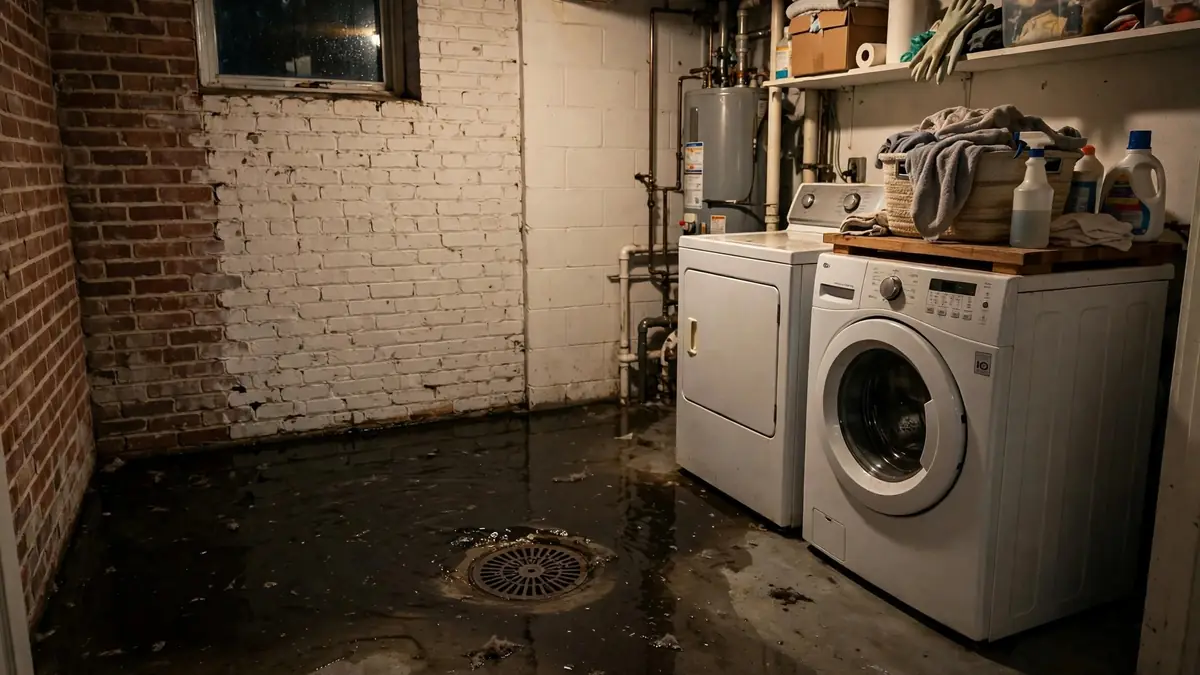
Key facts: Emergency Sewage Backup Service
- The IICRC S500 standard places sewage in Category 3, its most contaminated class of water.
- Any fixture you use can push more wastewater into the lowest drain in the house.
- Standard homeowners policies often exclude sewer backup unless a water backup endorsement was added.
- A contractor is reachable by phone 24 hours a day, every day, including holidays.

Health
Why this one is not a mop-and-bucket job
Sewage carries bacteria, viruses and parasites, and the water damage industry's S500 standard files it in Category 3, the most contaminated group there is [1]. That does not mean you need to panic. It does mean the usual household instinct of grabbing towels, a mop and some bleach is the wrong one. Bleach poured on sewage does not make it safe, and fumes in a closed basement can be a hazard of their own. EPA warns never to mix cleaning products, since that can create toxic vapors [6].
Young children, pregnant people, older adults and anyone with a weak immune system should not be in that part of the house at all. If someone has been splashed, wash the skin well with soap and clean water, and clean any cut straight away. If a person who has had contact later develops a fever or stomach trouble, or if a wound looks inflamed, call a doctor and mention the sewage. Nobody needs to be brave about this one. The sensible plan is to stay out and call.
Your drains
Stopping your own house from making it worse
A blocked sewer line works like a cork: whatever goes down the drains upstairs has nowhere to go, so it comes back up at the lowest opening. That is typically a basement floor drain or a toilet on the lowest level. Stop the washing machine mid-cycle if it is running, and turn off any ice maker or humidifier connected to a drain. Put a note on the toilet if there are guests or kids in the house, because somebody will forget.
If you have a basement bathroom that drains to an ejector pump and the pump has failed, the same rule applies, with the extra question of whether its power is safe to touch. Stay away from it if there is any water on the floor around it. A homeowner cannot safely open a cleanout under pressure either: taking the cap off a full line can release everything standing in it over your feet. Leave that for the plumber.
Sort out the trades
Plumber first, or cleanup first?
Two different problems are happening at once, and each has its own specialist. Someone has to clear the line, or the sewage keeps returning. Typically that is a plumber or a drain contractor with a cable machine and perhaps a camera. Someone else cleans and dries what the sewage reached. Sometimes a company does both, and sometimes not, so ask on the call. The sewage backup cleanup page has more on the second half of that job.
If it looks as though the blockage might be in the public sewer and not your own lateral, for instance if neighbors are affected as well, or if it arrives with heavy rain, report it to your sewer utility too. Rain can overload sanitary sewers and push wastewater back into homes, which is the form of overflow utilities track [4]. Homes on septic, which you will find in parts of northern New Castle County, have their own version: the tank may be full or the drain field saturated, and that calls for a septic contractor. Reduce all water use in the meantime.
What to tell them
Giving an accurate picture over the phone
When an independent contractor picks up, say the word sewage early, since it changes the conversation and the equipment involved. Then explain where it came up, such as the floor drain, a toilet or a laundry standpipe, and whether it is still rising now that everyone has stopped using water. Estimate how far it spread: one corner, the whole floor, or under a wall into a finished room. Say what it touched, particularly carpet, drywall, furniture and any stored boxes.
The water damage categories guide explains why that word matters. Tell them if a plumber has cleared the line yet, because cleanup done before the cause is fixed can be undone within hours. Mention anyone in the home with health concerns. And if you rent, say so, since the owner may need to authorize work. Ask what they can do tonight, what precautions they will take to keep contamination out of the rest of the house, and how they usually work alongside plumbers. Availability varies from night to night, and only the contractor can speak to it.
How urgent
This rarely belongs on tomorrow's list
Unlike a small clean-water leak, sewage inside a home is generally worth calling about the same night. Warm, wet, contaminated materials do not get better with time, the smell travels through the house, and you probably cannot use your bathrooms until it is dealt with. If it has reached carpet, drywall or anything else porous, or if it is still coming, do not put it off. EPA's cleanup guidance explains why soaked porous materials tend not to be salvageable when they cannot be cleaned and dried [2].
The nearest thing to a wait-until-morning case is a very small overflow onto a hard bathroom floor, stopped at once, from a toilet that was merely clogged. Even so, water can reach under vinyl and through to the ceiling below. Call and describe it if you are unsure; you can do that at 2 a.m. on a holiday as easily as at noon. If the home has no working toilet tonight, that alone may be reason enough to stay elsewhere.
If you must pass through
Getting past the mess without spreading it
- 1
Cover up
Waterproof boots and rubber gloves, plus long sleeves.
- 2
One route
Use a single path in and out, not several.
- 3
Change at the door
Leave boots there and bag dirty clothes on the spot.
- 4
Wash
Launder clothes separately in hot water and scrub your hands.
Heavy rain
When it only happens during storms
If the drain gave up during a downpour and has never given trouble on a dry day, the cause may well be outside your property. The public system takes on extra water through cracks and improper connections, and it can reverse its flow toward low-lying basements. Older parts of Wilmington, New Castle and Claymont have sewer laterals of clay tile or cast iron that may add to the trouble, with tree roots finding the joints in clay and rust narrowing the iron.
On a night like that, leave your sump pump discharge and downspouts where they are if you cannot check them safely, and note down whether either connects to the sanitary line, so a plumber can look later. You are likely to hear about a backwater valve, a device that closes when flow tries to run back toward the house [3], but that is a conversation for after the emergency. Just report the event to the sewer utility, keep your photos and do not rely on the water falling to mean that the danger has passed.
Do not
Five tempting ideas to resist
- Running the shop vacuum through sewage
- Dumping bleach across the floor
- Using a fan, which can move contaminated air around
- Dragging soaked carpet through the house
- Trying a hardware-store drain chemical on a full line
The air and the rest of the house
Keeping contamination in one place
Close the door to the room and lay a towel at its foot if that keeps the smell back. Turn off the furnace or air conditioning if its return ducts or the unit itself sit in the affected area, since running it could carry that air through the home. Open a window on the upper floors if the odor is strong and the weather permits. Do not reach for scented sprays or candles, which only hide the smell, and an open flame is a bad idea around any sewer gas.
Power is the other concern. If sewage has reached outlets, appliances or the electrical panel, the safety rules are the same as for any flood: turn circuits off only from a dry location, and otherwise wait for an electrician. Keep food, toothbrushes and baby items away from that part of the house, and throw away any open food that was splashed. Pets need keeping away too, because a dog will happily walk through this and then up onto the sofa.
Paperwork
Insurance surprises that begin tonight
Many homeowners learn about their water backup coverage only at the moment they need it. Standard policies commonly leave out sewer and drain backup unless an endorsement was added, and outside flooding usually falls under separate flood coverage. You cannot change that tonight, so put your energy into recording what happened. Photograph the drain, the extent of the spread and the items involved, using your phone from a distance, and note the time.
Report it promptly, even if you are unsure about coverage, and ask the plumber to write down what they found, including any camera footage of roots or a collapse. If you think something has been handled unfairly, the Delaware Department of Insurance helps consumers with claim questions [5]. Renters should notify the landlord or manager straight away, in writing where possible, because shared lines and the building itself are normally the owner's responsibility, and your own belongings fall under any renters policy you carry.
FAQ
Sewage emergency questions
Can I use the toilet upstairs if the backup is in the basement?
No. Upstairs fixtures drain to the same line, so using one can send more sewage to the basement.
Can I clean a small sewage spill myself?
A tiny overflow on hard flooring may be manageable with protection, but anything on porous materials or spreading calls for a professional.
Should the family leave the house?
Consider it if there is no working toilet, the smell is strong or someone vulnerable lives there, and take medication with you.
Who clears the blockage?
Usually a plumber or drain contractor. Ask on the call whether the restoration contractor handles it or works with someone who does.
Is help available on a holiday?
Yes, the line is answered every day of the year and connects you with an independent contractor who serves your ZIP code.
Sources and citations
- [1]IICRC — ANSI/IICRC S500 Standard for Professional Water Damage Restoration
- [2]U.S. EPA — Flood Cleanup to Protect Indoor Air Quality
- [3]Wikipedia — Backflow prevention device
- [4]Wikipedia — Sanitary sewer overflow
- [5]Delaware Department of Insurance
- [6]U.S. EPA — Flood Cleanup to Protect Indoor Air and Your Health