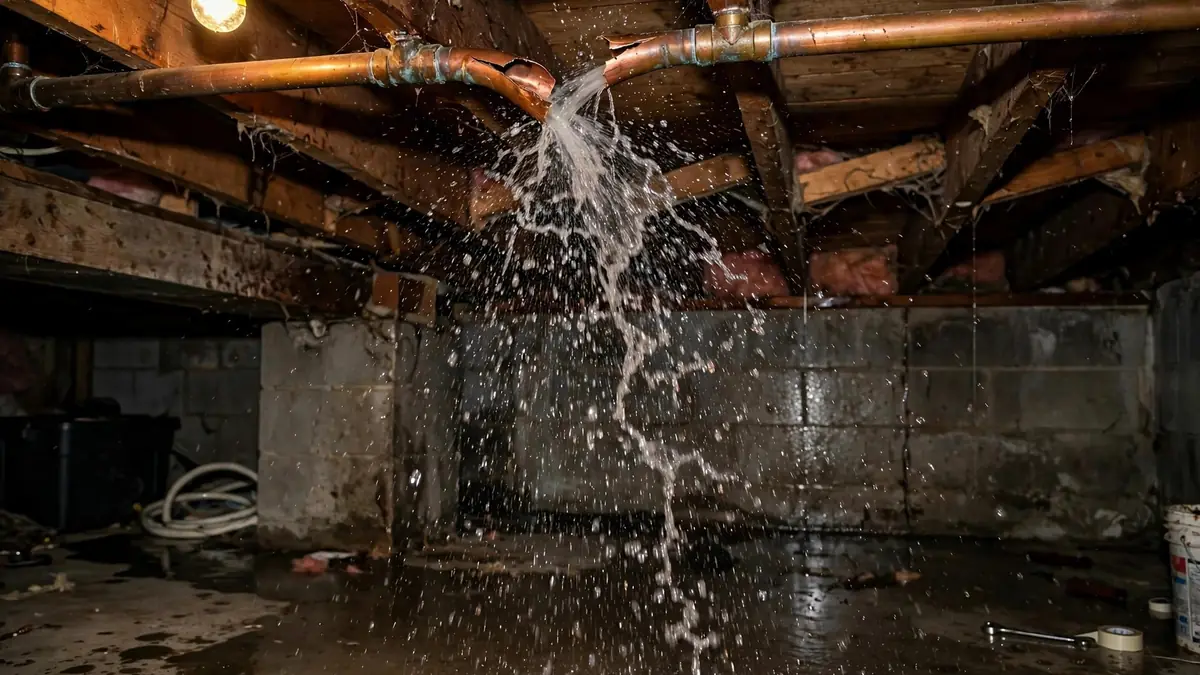
Key facts: Emergency Burst Pipe Service
- In many northern Delaware houses the main shutoff is in the basement, on the front foundation wall near the meter.
- A pipe that froze may split without leaking until the ice melts, so watch it as temperatures rise.
- Never thaw a frozen pipe with an open flame.
- The phone line reaches an independent contractor at any hour, holidays included.
Valve hunt
Where the main shutoff tends to hide
In a great many houses around Wilmington, Newark and Claymont, the supply comes through the front foundation wall into the basement, and the valve is close by, often beside the meter. Follow the thickest pipe you can see. On a slab home, which is more common in some newer neighborhoods, try the utility closet, the garage wall or the area around the water heater. A row of older homes may have the valve tucked behind shelving or a paneled wall, so pull things aside rather than giving up.
Older gate valves with round handles can be stiff. Turn clockwise firmly but do not force it until something snaps, as a broken valve only adds to your troubles. A lever valve needs just a quarter turn, until the handle sits crossways to the pipe. If it will not move, close the individual stop under the fixture if that is where the break is, or call your water supplier's emergency number to ask for help at the street. Try not to attempt the curb valve without the proper key.
After the valve
Bleeding the system and protecting the water heater
Water does not stop instantly at the break, because everything above it is still in the pipes. Open a faucet at the lowest level of the house and another up high, and flush toilets once, to empty what remains and let air in. Within a few minutes the drip at the break should slow. If it carries on at the same strength, then you have not closed the right valve, or the line is on the street side of it.
Your water heater needs thought too. If the hot side broke or you plan to leave the system off for a while, turn the unit off: use the breaker for electric, or set a gas unit's control to its off or pilot position. A tank that loses its supply while the elements keep firing can be damaged. If water has reached the base of a gas heater or furnace, leave it off and ask a qualified technician to check it before you use it again.
Overhead
Read the ceiling before you walk under it
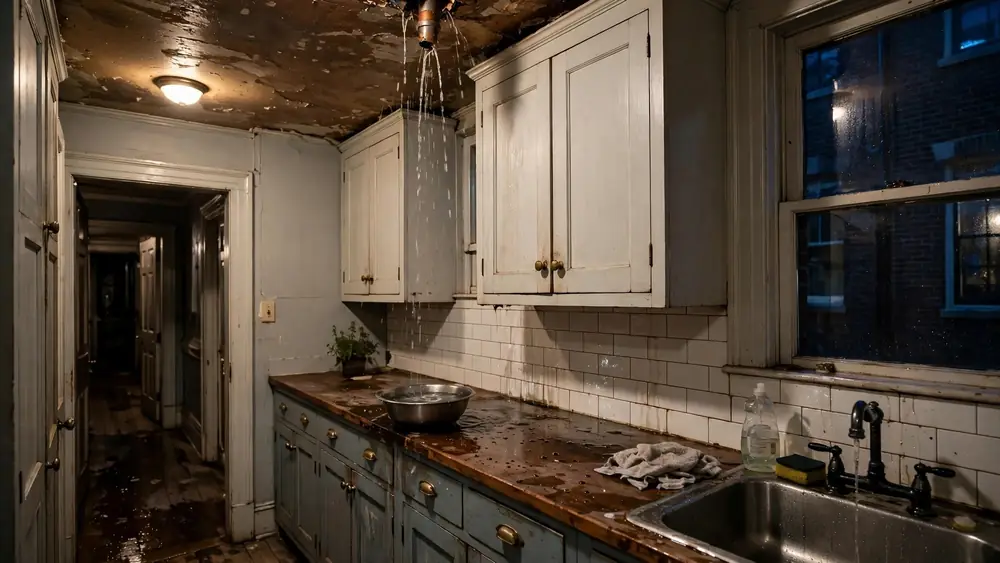
Breaks in upstairs bathrooms and laundry rooms send water onto the ceiling below, where it collects before it shows. Look for a belly in the surface, a line of new cracks, or drips coming from a light fixture. That room is now closed. Shut the door if you can, and lay a sheet of plastic down from the doorway if it is safe to do so. Wilmington rowhomes often run second-floor plumbing above the kitchen, and plaster ceilings in those older houses are heavy enough to injure someone badly when they let go.
Do not push a broom into a bulge to drain it. People do this on the internet and it looks tidy, but it brings water and sometimes the whole panel down over the person holding the broom. A contractor can open it in a controlled way, and the wet drywall guide explains what happens to it afterwards. Leave the switches alone in that room, turn off that circuit at the panel, and do not go back in to rescue anything but a person.
On the line
How to describe a burst to the contractor
Begin with your ZIP code and the words burst pipe, then say that the water is off, or that it is not. That last fact changes the conversation more than any other. Explain roughly how long it ran and where the break is, as far as you can tell: above a ceiling, inside a wall, at a fixture, or in the basement. List each floor it reached, from the top down, since water takes that route through a two-story home.
It also helps to mention the ceiling type if you know it, whether you have seen water near the panel, and whether a plumber has been called, because a restoration contractor dries the structure and does not necessarily repair the line. Ask whether they can recommend or work alongside a plumber. The burst pipe water damage page explains that split of roles. Ask what is realistic overnight. They, and not this site, can speak for their own availability, licensing and insurance, and you should feel free to press those points before you agree to anything.
Who to call
The other calls you may need to make
- A plumber, to repair the break itself
- An electrician, if water got near the panel or fixtures
- Your insurer, as soon as you reasonably can
- Your landlord or building manager, if you do not own
- A neighbor, if you share a wall in a row or a condo
Right now or at first light?
Sorting out what cannot wait for morning
Closing the valve buys you options, though it does not always buy you the night. If water went into a ceiling, a wall cavity or through a floor, it is moving down and sideways while you sleep, so make the call now. The same is true if it ran for a long time before you caught it, or if the wet area is more than one room. Coming home from a trip to a house that has been running for days is an especially clear case.
A leak under a sink that wet a cabinet floor and little else can reasonably wait for daylight, as long as the supply stop is closed and you have mopped up and got air into the cabinet. Keep EPA's 24 to 48 hour guideline for drying in mind [3] when you decide, and count the time from when the leak probably started. A call takes only a few minutes, and the contractor can tell you honestly if morning is fine.
Cold snaps
When the break happens in a deep freeze
A frozen line behaves strangely. Ice both causes the split and plugs it, so you may have no leak at all until the sun comes out and everything lets go. That is how a dry evening turns into a flood at lunchtime. If a faucet has gone to a trickle on a bitter night, treat that pipe as frozen, leave the faucet open and find the likely spot: outside walls, kitchens over crawlspaces, garages and unheated additions, all of which are common in northern Delaware houses.
Warm it slowly. The American Red Cross warns against any open flame [1], which rules out torches, however quick they look on video. A hair dryer or a towel soaked in warm water will do, used from a dry place. Keep cabinet doors under sinks open and hold the thermostat steady through the night, as the National Weather Service and Red Cross advise [1][2]. Know where the valve is before you begin, because a thawing pipe may reveal a split with no warning. If one line has frozen, check the others.
Evidence
Keep the proof before it disappears
- 1
The break
Photograph the failed section where it sits, before the plumber cuts it out.
- 2
The part
Ask to keep the piece that failed, in a labeled bag.
- 3
The times
Write down when you found it and when you closed the valve.
- 4
The rooms
Shoot each affected ceiling, wall and floor from the doorway.
Insurers
A sudden break reads differently from a slow leak
A policy will often look more kindly on a sudden break than on damage that built up over weeks, and an insurer may also ask whether the house was being heated during a freeze. That is why your timeline matters. A plain, honest note made tonight is more useful than a recollection three weeks later. Give the plumber's written explanation of the failure to the adjuster with your own photos, and hold on to all invoices.
Everything depends on your policy, so nobody on the phone can promise you what will be covered, and you should be wary of anyone who tries. The Delaware Department of Insurance can help with consumer questions if a claim becomes difficult [4]. Do not throw away wet materials before photographing them. If a contractor removes anything, ask them to record it in their notes.
No water
Living with the main shut off tonight
Once the supply is off, the whole house is dry at the tap, and that takes some planning. Fill a bucket from anywhere you can before you bleed the lines if you still have a moment, so you can flush a toilet by pouring. Bottled water will cover drinking and medications. If the break is in a single branch and a plumber confirms that a local stop can isolate it, you may be able to get the rest of the house back on, but do not reopen the main on a guess.
If you do need to reopen it briefly, open it slowly and stay beside the valve with someone watching the break. Boilers and hot-water radiators are a separate matter: if heat is out in deep cold, the risk of further freezes goes up, and a heating technician needs to look at the system. In that case, it may be better to spend the night elsewhere with the lines drained.
FAQ
Burst pipe questions, answered quickly
I closed the valve but water is still coming out. Why?
The pipes are still draining. Open low faucets. If it does not ease within minutes, you may have closed the wrong valve.
Plumber, restoration crew, or both?
Often both. The plumber repairs the line, and the restoration contractor removes water and dries the structure.
Is it safe to use the lights?
Not in a room with water coming through the ceiling. Use a flashlight and switch off that circuit if the panel is dry.
Can a broken pipe wait for the holiday to end?
If it wet more than a small cabinet area, do not wait. The line is answered on holidays as on any other day.