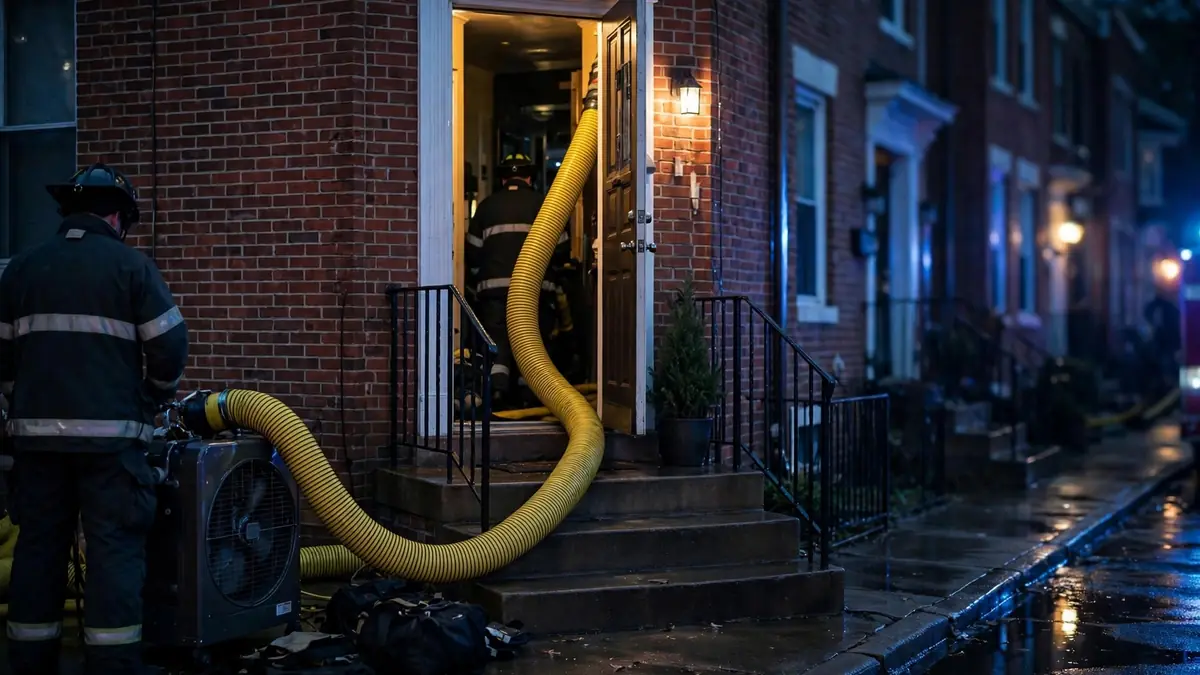
Key facts: Emergency Water Extraction
- A wet/dry vacuum suits small amounts of clean water, not sewage, floodwater or anything deep.
- The IICRC S500 standard treats sewage and rising floodwater as Category 3, the most contaminated class.
- Calls connect to an independent contractor at any hour, 7 days a week, including holidays.
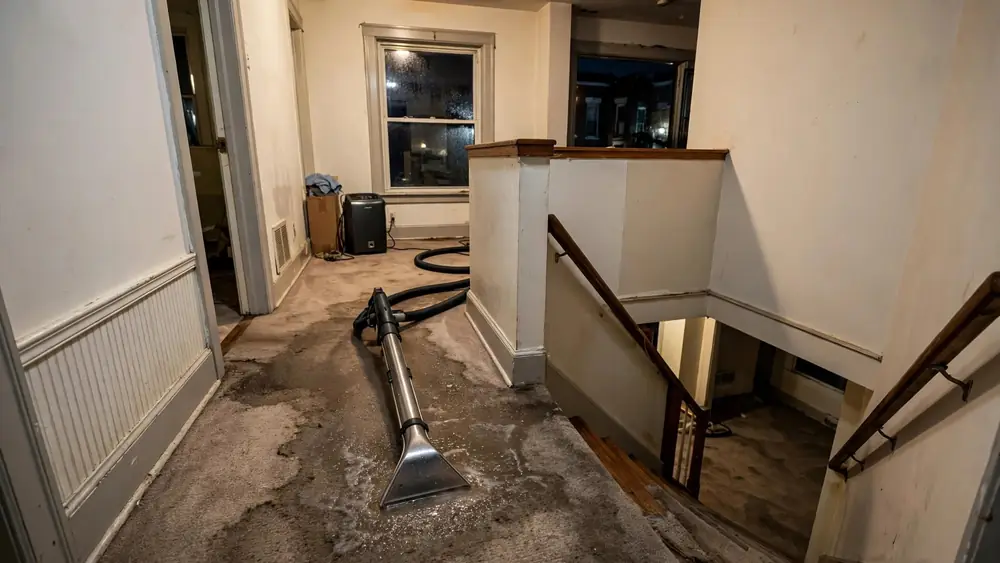
Read the water
Depth and color decide almost everything
Take a moment to look before you start moving things. Water that is clear and odorless, from a line that broke a short while ago, is about as benign as a flood gets. Grey, soapy water from a washer or dishwasher is dirtier. Brown water with a smell, or anything that came up through a drain or in from outdoors, has to be treated as dangerous. The IICRC S500 standard places sewage and rising floodwater from rivers and streams in Category 3, its most contaminated group [3], and no household vacuum or mop belongs anywhere near it.
Depth matters next. A film across vinyl flooring is a towel-and-vacuum job. An inch across a carpeted room is already heading into the pad and under the walls. Several inches in a basement calls for a pump. Use something like a yardstick from the stairs to get a figure, because a contractor can plan far better around a measurement than a guess.
On your own
When a wet/dry vacuum is a fair fight
A household shop vacuum can genuinely help if three things are true: the water is clean, it covers a small area, and you have power from a safe outlet with no cord trailing through the wet. Empty the canister often, since a full one is heavy enough to hurt your back on the stairs. Work from the far edge toward the door so you are not walking back through what you have already cleared.
Know when to stop. If the tank fills every minute, if carpet keeps squelching after several passes, or if water comes back as quickly as you take it away, you are outmatched. Never run an ordinary vacuum cleaner on a wet floor, as it is not built for this and can be a shock risk. A garden pump pulled from the shed is also a gamble: the hose has to discharge well away from the foundation, or the water simply soaks back down and returns through the wall.
On the phone
Details that help a contractor plan the first visit
You will be speaking with an independent contractor who needs a mental picture of your home. Tell them the depth you measured, the floor it is on and what is underneath: carpet with pad, hardwood, tile, laminate or bare concrete. Mention access as well. Some Wilmington streets are narrow and rowhome stairs are tight, so whether a truck can park near your door and how many steps sit between it and the water are useful facts, not small talk.
Say whether you have power, because some equipment relies on it, and whether the water has stopped rising. If the source was a pipe, say the valve is shut. Then ask your own questions. What can be done tonight? Do they carry what is needed for this depth? What should you move before they come, and what should you leave? Ask for an honest word on their availability, because this site does not promise a response time on any contractor's behalf.
Decide
Pump tonight or first thing in the morning?
Some situations should not sit overnight. Carpet soaked wall to wall, water that has crossed into a second room, water dripping through to the floor below, and anything contaminated all get worse with every hour. So does a wet floor over a finished basement, because the ceiling beneath is quietly collecting whatever comes through. In a two-story Bear or Newark house, that sequence can go on all night without anyone hearing it.
It is more reasonable to wait for morning when the water is clean, the source is off, the area is one room with a hard floor and you have already cleared most of it. Waiting still has a limit. EPA guidance gives 24 to 48 hours as the window for drying wet items and materials [4], and that window includes the time before you found the leak. If you truly do not know which camp you are in, call and describe it; the line is staffed through the night for exactly this.
Clearing the room
What to move, and in what order
- 1
Electronics
Unplug only from a dry position, then carry them upstairs.
- 2
Paper and photos
Move anything irreplaceable next, flat and off the floor.
- 3
Rugs
Roll up loose rugs so dye cannot transfer to the floor.
- 4
Furniture
Put foil or plastic under the legs of whatever is too heavy to shift.
Floors
Your flooring tells you how hard the clock is ticking
Each floor has its own urgency. Carpet and pad behave like a sponge laid over the subfloor, so a room that looks merely damp may be holding a good deal of water below the surface. Hardwood is the one to worry about when water has been there a while, as boards take it in through their edges and begin to cup. Laminate and floating floors are unforgiving because a foam layer traps water out of sight. Tile looks fine until you learn the water went in at the grout lines and along the tub.
None of this needs a verdict tonight, and you should not start prying up boards to find out. Just tell the contractor what you have. Those with hardwood can read more at hardwood floor drying when there is time, and a wet wall gets its own treatment in the drywall guide. What you can usefully do right now is get water off the surface and keep air moving through the room.
Please avoid
Tonight's common mistakes
- Plugging a vacuum in with its cord across wet floor
- Pouring bleach on standing water
- Pumping onto your own foundation
- Pumping a flooded basement while the ground outside is still saturated, without advice
- Turning on a ceiling light under a wet ceiling
- Walking wet footprints through the rest of the house
Basements
Why pumping out too fast can backfire
With a deeply flooded basement, the instinct is to get every drop out as soon as a pump arrives. That instinct deserves a pause after a real flood. If the soil around the house is still full of water, it is pressing against the foundation from outside, and the water inside may be helping to balance that pressure, and FEMA has warned that draining faster than the ground drains can crack or rupture walls and floors [5]. Ask the contractor about this if you have more than a few inches and the ground is still waterlogged, as often happens after a long storm along the Christina or the Brandywine. A burst supply line in a dry spell is another matter, and that water can usually come out straight away.
If that is your situation, the emergency flooded basement page goes through what to do on the stairs. Either way, the discharge hose needs to run far enough from the house that water drains away and not back toward the wall.
Your body
Protecting yourself while you clear water
If you are going to work in water that you have judged to be clean, wear rubber boots and keep the lights on through a battery lantern if the circuits are off. Wet floors are slick, and stairs are slicker. Carrying soaked carpet is much heavier than people expect, so leave it where it is. Two people moving a wet sofa is a fair way to end up in an emergency room, and nothing in that room is worth it.
Floodwater is another category altogether. EPA's flood cleanup guidance treats items soaked by floodwater as a hazard to indoor air if they cannot be cleaned and dried [1], and Ready.gov warns that floodwater can hold sharp debris and contamination [2]. If you have touched dirty water, wash your hands with soap and clean water before eating, and keep children and pets well clear. Anyone feeling faint, or anyone with a heart or breathing condition, should not be lifting at all tonight.
Afterward
Getting the water up is only the opening move
A floor that looks dry can still be holding plenty in the materials underneath, so do not treat an empty room as a finished job. Ask whoever comes out to take readings and show them to you, and read about structural drying when you have a quiet moment. The water extraction service page sets out what that visit involves. Keep every record, from your first photos to the contractor's notes, since your insurer may ask how much water there was and how long it sat. Those early pictures, showing depth against a baseboard or stair, tend to be the ones people wish they had taken, so take them now. A short video that pans across the room with the yardstick in shot does the job well.
FAQ
Questions about extraction tonight
Is my shop vacuum good enough?
For a small area of clean water, often yes. Stop if the water is dirty, keeps returning or has soaked a whole carpet.
Can I pump a basement myself?
Only with clean water and no electrical risk. After a real flood, ask first, because saturated ground can push on the walls.
Will extraction work without power at my house?
Possibly. Equipment needs vary, so mention the outage on the call and ask what the contractor can bring.
What if the wet carpet is already smelly?
Say so right away. An odor can mean the water is dirty or has been there longer than you thought.